
Knowing what your bathtub is made of is useful when you choose fixtures for the home or plan a renovation. Cast iron, enameled steel, acrylic and fiberglass all differ in how they behave and how long they last, even when they look the same under a white finish. Below are the main ways to tell if a bathtub is cast iron, steel or plastic.
The Magnet Test
Cast iron is a ferromagnetic material, so a magnet is the first check. Put an ordinary fridge magnet on the side wall or the apron of the tub. A magnet sticks to cast iron and to steel. It does not stick to acrylic or fiberglass.
- If the magnet holds, the tub is metal under the coating: cast iron or steel.
- If the magnet does not stick, it is most likely acrylic or another material.
The magnet does not tell cast iron from steel, since both are magnetic. One more case: American Standard's description of its Americast material says it is porcelain enamel over steel with a composite backing, lighter than cast iron. A magnet will stick to that tub too, so for the question of how to tell if a bathtub is cast iron or steel you need the checks below.
Knock and Touch: Sound, Cold, Flex
Knock on the walls
When you tap the walls of the tub you can hear the difference. A cast-iron tub makes a deep, dull sound. An acrylic tub sounds higher and hollow. Cast-iron tubs are solid and very stable, they do not vibrate, and because of this the sound of running water is muffled.
There is a common opinion that steel tubs "drum," that the bottom "plays" under load and that the water in them cools fast. This mostly concerns tubs with walls less than 1/10 inch thick. When they fill up, thin-walled tubs rattle.
Feel the temperature
A cast-iron tub is heavy, so it takes a long time to warm up, and the walls stay cool to the hand for a while. Bath water stays warm in it for a long time. Steel warms up fast, but the water in it cools just as fast. Acrylic gives off little heat: the water cools much more slowly than in steel or cast-iron tubs.
Press on the bottom and the rim
Cast iron does not give at all. In a thin steel tub the bottom can move under weight, and the walls may deform fairly soon, which means the enamel will crack sooner or later. Acrylic has low static strength. Like most large polymer products, an acrylic tub needs a special frame to stay stable, so a soft spot or flex under your hand points to plastic.
Weight and Edge Thickness
How much does a cast iron tub weigh
Cast-iron tubs are much heavier than their acrylic or steel counterparts. If you have the chance, try to judge the weight of the tub:
- A cast-iron tub weighs several hundred pounds, depending on the size.
- Some manufacturers bring the weight down to about 220–240 lb by making the walls thinner, about 1/4 inch instead of the 3/8 inch or so of older tubs. That is still a serious weight for any work.
- A steel tub is four to five times lighter than cast iron, about 65–110 lb.
- Acrylic tubs are as a rule lighter still, about 45–110 lb.
A practical tip for steel: try to move the tub. With a thick-walled model this is not easy. If a standard 5-foot steel tub weighs only about 45 lb, its walls are not thick enough. Tubs made of steel about 1/8 inch thick should be heavier, 65–110 lb.
Wall and edge thickness
Cast-iron tubs usually have thick walls, which is what makes them heavier than acrylic or steel. Steel tubs come thin-walled, less than 1/10 inch, with a very thin enamel coat, and thick-walled, around 1/8 inch, stamped from a single sheet without a weld seam. If you can see a cut edge, at the drain or overflow opening for example, metal is visible on steel and cast iron, while plastic shows layers.
Shape
Cast-iron tubs most often have classic shapes, oval or rectangular. Because of the casting process they do not come in many sizes or designs. Steel is more malleable than cast iron and can be formed into any shape, so a non-standard size or form points more toward steel or acrylic.
Porcelain on Cast Iron vs. Enameled Steel
People often ask: how do I know if my tub is porcelain or enamel? On both cast iron and steel the surface is an enamel coating, which can come in different shades, so the question is really what metal is under it.
Cast iron
The outer surface of a cast-iron tub is usually covered with enamel. The enamel holds heat well but can chip. On good tubs the enamel is strong and even through its whole thickness, glossy or matte, about 1/32 inch for white and a little more for colored enamel. The enamel is the most vulnerable spot, however good it is. Drop something heavy in the tub and a chip can form. Over time the enamel wears, loses its smoothness, darkens and yellows.
The surface should be perfectly smooth and even, with no black specks or pits. Roughness can be a sign that the enamel has started to break down or of poor manufacturing. If you look at the walls at an angle, you can often see a slight waviness. If you only see it, it is not a problem. If you can feel it with your hand, the tub was poorly made.
Enameled steel
Two kinds of steel are used for tubs. Stainless steel tubs are not very common because the special alloy is expensive. Tubs made of structural sheet steel are more widespread. The enamel, or less often a glass-ceramic coating, makes the tub strong and protects it from rust. The enamel contains glass-forming natural materials, quartz among them, and it is fired in kilns at about 1,560°F. The result is a thin coating that is practically baked into the steel. On thin steel, though, dents and chips appear quickly. For the pros and cons of each material when you buy a new tub, see our older post on choosing between cast iron, steel and acrylic.
Acrylic vs. Fiberglass: How to Tell if a Tub Is Fiberglass or Acrylic
Not everything that is sold as acrylic is acrylic. A fiberglass tub is glass fiber in polyester resin under a thin gelcoat; an acrylic tub is a solid acrylic sheet reinforced from behind. Fiberglass is usually thinner, flexes more and dulls sooner.
Look at the edge
If you look at an acrylic fixture from the cut edge, you can see the layers of the materials used. Ideally there should be two: the acrylic, about 3/16 inch, and the reinforcement. For the reinforcing layer manufacturers use either fiberglass bonded with polyester resin or a polyurethane composite. The outside of the tub tells you which one was used. Fiberglass has a ribbed surface, and the composite has no texture and is dark in color.
Light, surface and smell
- Flashlight. One simple check is to shine a flashlight on the wall. If light shows through, the tub is thin and may not hold up under load.
- Touch. The surface should be perfectly smooth, with no roughness, dents or scratches.
- Color. Streaks, uneven shades and yellowing point to a low-quality product.
- Smell. An acrylic tub should have no smell. Chemical odors belong to cheap materials. Fiberglass reinforcement is done with styrene, which has an unpleasant chemical smell.
Our older article on fiberglass, porcelain and other fixture materials goes into more detail on how these materials are made.
A magnet tells metal from plastic; weight, sound and the edge tell cast iron from steel and acrylic from fiberglass.
What Each Material Means for Reglazing and for a Walk-Up
Cast iron
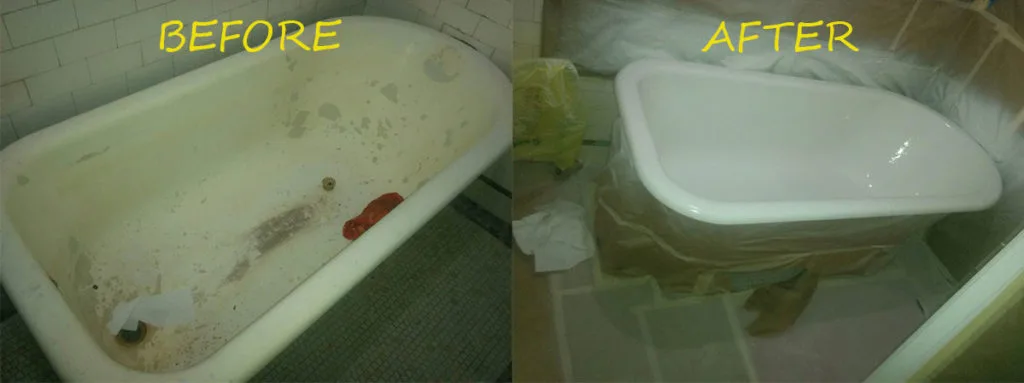
The mass of a cast-iron tub is not only its strength but also its drawback, in transport, installation and removal. Even a lighter model of 220–240 lb is still a serious weight to handle. In a walk-up building this weight has to go down every flight of stairs. Removing a cast-iron tub also means the repair work that comes with taking it out. When the tub has lost its look (chipped or worn enamel, rust and so on), the surface can be renewed instead: see how bathtub reglazing for old tubs works, and compare the two paths in our guide on reglazing vs. replacement.
Steel
A steel tub is four to five times lighter than cast iron, so it is easier to carry and install. Thin-walled steel is the weak case: the walls can deform, dents and chips form quickly, and the enamel cracks over time. Enameled steel resists acids and cosmetic products and is easy to care for.
Acrylic and fiberglass
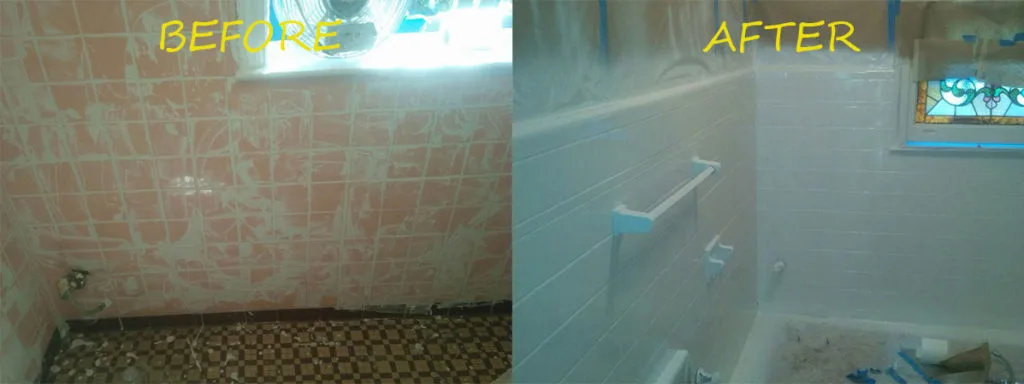
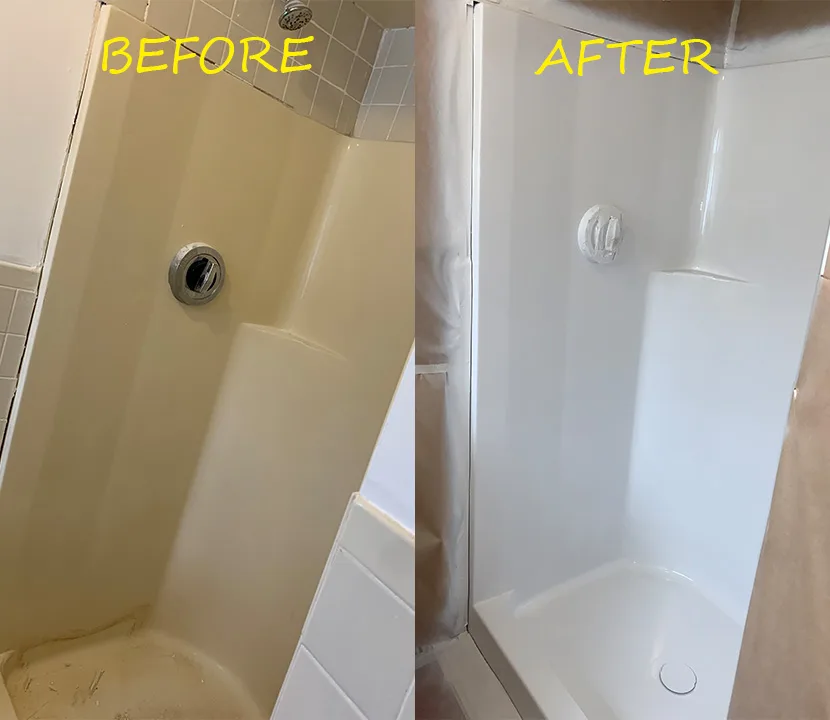
Acrylic and fiberglass tubs are the lightest. They also flex more, so they need a coating system made for them; we match the product to the tub. Damage and scratches on acrylic can be repaired. Avoid abrasive cleaners, which damage the surface quickly. Cast-iron tubs are rarely fitted with whirlpool jets because it is technically difficult, and on steel tubs it is possible but still rare. For jetted tubs, see the page on reglazing jacuzzi and spa tubs. You can also look through before and after reglazing photos of different tub materials.
When to Have a Pro Check
The checks above work best together. A magnet, the weight, the sound and the edge each give one hint, and it is easy to go wrong by sound or weight alone. A built-in tub with a tiled apron is hard to check: you cannot lift it, and the edge is often hidden. The most reliable way is to look for a label or the product papers, which state the material.
If you still are not sure how to tell what your tub is made of, have a reglazing technician look at it before you plan the work. On Staten Island, start from our Tottenville, Staten Island service page, or send us a question through contacts.