
Lead is a toxic metal, and in older New York buildings it is usually found in old paint. Fewer people know that some older porcelain-enameled tubs have lead in the glaze too. If your tub is the original one in a prewar apartment, it is fair to ask what is in its finish and what that means for the people who use it.
Do Old Bathtubs Contain Lead?
Some do. Lead can harm people of any age, and it turns up in places most people never think about: old paint, soil, some consumer products, and the glaze of certain older tubs. A person can be exposed to lead and still feel normal and not look sick. That is why the question is worth asking even when nothing seems wrong.
In a 2008 study, researchers checked porcelain-enameled tubs with an XRF device, and lead was found on the tubs they tested. They traced the lead on the surface to worn porcelain. In the same study, the bath water they tested stayed below the detection level. So the answer to "is there lead in bathtubs" is not a plain yes for every tub, and not a plain no either. It depends on the tub, its age and, most of all, the state of its surface.
Do old cast iron tubs contain lead?
Cast iron tubs were the standard in older city buildings for a long time. The iron body is covered with porcelain enamel, a glassy coating fired on in several layers. When people ask about lead in old cast iron tubs, they are mostly asking about this coating. Some older enamels had lead in them. You cannot tell by looking at the tub, by its color or by its age alone.
Cast iron tubs are heavy and last a long time, which is why so many of them are still in use. More on these tubs and why owners keep them: why old cast iron tubs are worth keeping.
Why Worn, Chalky or Chipped Glaze Matters More
Intact enamel is a hard, glassy layer. The trouble starts when that layer wears. Over the years a tub loses its shine and whiteness, and the surface becomes porous and gets dirty faster. Enamel is the weak link of a cast iron tub.
How does it wear? For years tubs were cleaned with scouring powders. Small hard particles, together with the dirt, can take the shine off a smooth surface. They leave scratches going in every direction. On a damaged coating dirt builds up faster, and bacteria start to grow in it.
With harsh cleaning the enamel layer gets thinner bit by bit and turns brittle. In time it can chip off. If the enamel chips and the base metal shows, the metal starts to rust fast. Acid cleaners are another risk: they are fine for stainless steel or ceramic ware, but enamel may simply not stand up to acid and can lose its gloss.
Here is why this matters for lead. The study above linked lead on the surface to worn porcelain. A finish that has gone chalky, rough, thin or chipped is not the same as a smooth, glossy one. Signs to look for:
- the surface feels rough or chalky under your hand;
- the gloss is gone, especially on the bottom and around the drain;
- there are chips, cracks or spots where the base metal shows;
- rust around chips or under the faucet.
Every tub ages at its own pace. Our article on how long a bathtub can serve covers what wears out first.

How to Find Out Whether Your Tub Has Lead
The only way to know is to test. Home kits are the first thing many people think of, but they have limits. EPA-recognized test kits cover only certain surfaces: wood, ferrous metal, drywall and plaster. Tub glaze is not on that list. The details are on the EPA page on lead test kits.
A certified lead inspector and XRF
For a tub, the usual route is a certified lead inspector. Inspectors often use an XRF analyzer, the same kind of device used in the 2008 study. It reads the surface without damaging it. If you are already testing other surfaces in the apartment, such as old paint on windows and doors, ask for the tub to be included.
A few questions are worth asking yourself before you call:
- Do you live in an older house or apartment building where repair work creates dust? Buildings put up before 1960 may have lead-based paint, and when old paint is damaged it can turn into harmful lead dust.
- Does anyone you live with work in construction or renovation of old buildings, or with metals that contain lead?
- Has anyone in your household ever had a high blood lead result?
If the answer to any of these is yes, the tub is one more thing to check, not the only one.
Precautions While You Wait for an Answer
These are general steps for lead at home. They are not medical advice.
- Wash floors, window sills, hands, toys and pacifiers often.
- Do not let small children drink bath water or put wet toys and hands in their mouths during the bath.
- Do not scrub a worn tub with abrasive powders or acid cleaners. They take off more of the surface.
- Keep children away from peeling or damaged paint, and from any spot where the tub enamel is chipped.
- Tell your building owner about peeling, cracked or chipping paint. Building owners must fix it safely.
For children, the NYC Health Department says to remind your doctor to test your child for lead at age 1 and at age 2. If you do not have a doctor, call 311 to find out where your child can be tested. You can also call 311 if repair work in your apartment or building is being done unsafely. More is on the NYC Health lead poisoning prevention page.
Reglazing Covers the Surface. It Is Not Lead Abatement
People often ask whether reglazing settles the lead question. It does not. Reglazing puts a new coating over the old surface. The old enamel stays under it. That is not lead abatement, and it should not be called one. If an inspector finds lead in your tub, the inspector is the one to tell you what your options are.
A worn, chalky or chipped tub glaze is the one to check first; a new coat on top does not take the lead out.
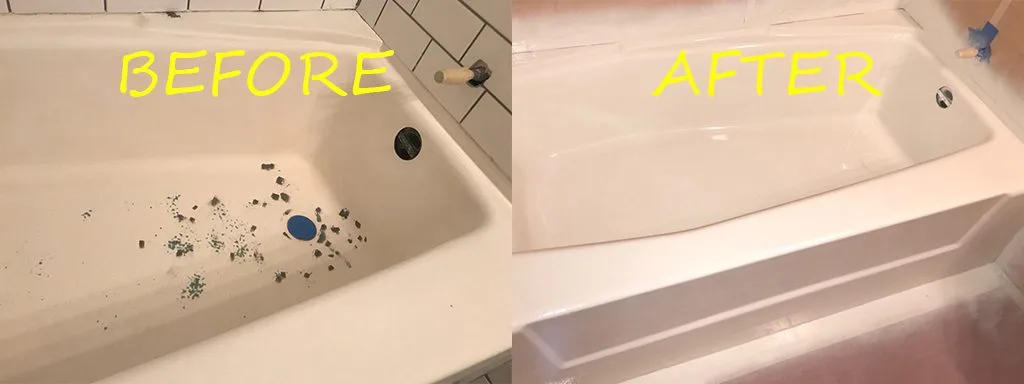
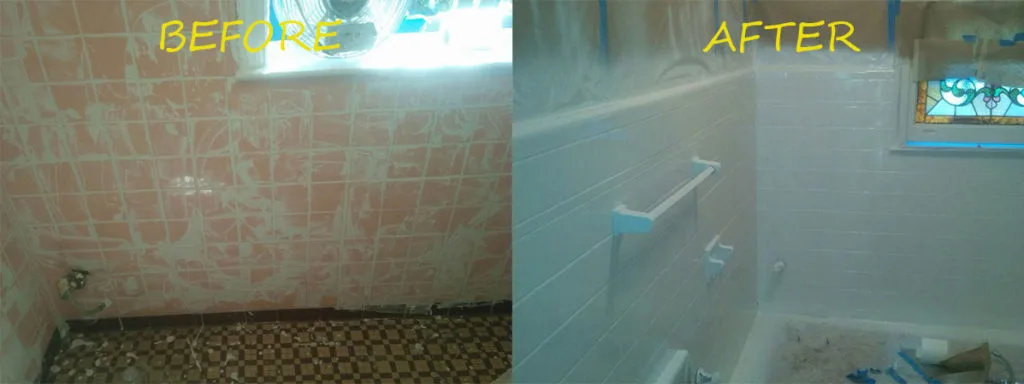
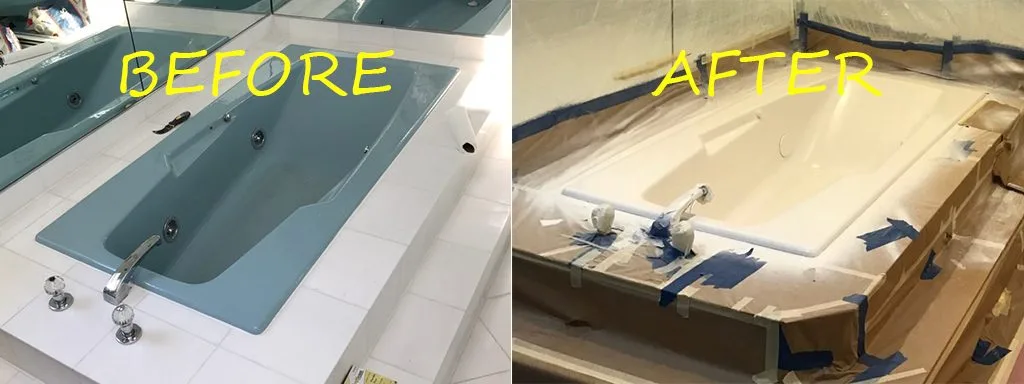
What reglazing does is give the tub a new, smooth surface in place of a worn one. You can see what that looks like in before and after photos of reglazed tubs. For the work itself, see the bathtub reglazing service page.
Some owners weigh this against taking the tub out. Removing a heavy cast iron tub from an old building is real demolition work, with its own dust. A side-by-side look is in reglazing versus replacement and what it costs.
Prep Dust: The Step That Needs Care
Before any new coating goes on, the old surface has to be cleaned, etched and sanded so the coating holds. This step makes dust. If the old glaze has lead in it, that dust can carry it.
The general rules for dusty work in old buildings are the ones to keep in mind here:
- never dry-scrape or dry-sand surfaces that may contain lead;
- use wet methods and wet cleanup to keep dust down;
- whoever does the work should wear protective clothing and a tight-fitting respirator;
- keep children and pets out of the bathroom while the work goes on;
- do not eat, drink or smoke in the work area;
- change work clothes and shoes before leaving, so dust does not travel into the rest of the home, and wash them separately.
If you already know or suspect your tub has lead, say so before any work starts. The smell of coatings and how long to air out the room are a separate subject, covered in our guide to reglazing fumes and ventilation.
Older Tubs in Upper Manhattan
Many prewar buildings in northern Manhattan still have their original tubs, and the questions above come up often there. If you live in the area, see our page on tub reglazing in Washington Heights.
What to Do Next
Look at your tub closely: gloss, roughness, chips, rust. If the finish is worn and you have small children at home, test first, and take the general precautions in the meantime. Once you know what is in the glaze, you can decide about the surface. If you want a reglazer to look at the condition of the finish, use our contact page to send tub photos.