
Most of the time it is not the tile that spoils the look of a bathroom but the old, darkened joints between the tiles. So is regrouting worth it, or is there a simpler way to give the seams a fresh look? Below is what to look for, what each fix does and where its limits are.
Signs the grout needs work
Even good tile can lose its neat look over time because of the state of the joints. At first glance the surface stays whole and tidy, yet darkened grout, traces of mold and ground-in dirt can turn a well-kept bathroom into a room that looks like it has not seen a renovation in years.
What is especially annoying is that this happens even with regular cleaning. Moisture, soap residue, shampoo and household chemicals slowly work their way into the grout. The porous material soaks up dirt like a sponge, and constant humidity makes ideal conditions for mildew and mold. In the bathroom this is made worse by constant condensation. As a result, joints that were once light and neat turn gray, yellowish or even black.
Signs to watch for:
- cracks running along the joints;
- grout that crumbles and falls out when touched;
- stains that do not come off with cleaning, gray, yellow or black;
- black spots, which can be mold, especially in a bathroom with poor ventilation;
- gaps where the tile meets the tub.
Many people try to fix the problem with expensive cleaners that promise an instant result. The effect of such products often turns out to be temporary. The surface does get cleaner, but after a short time the dirt shows again. The reason is that the problem sits much deeper than a film on the surface. If the grout has already lost its original properties, cosmetic cleaning helps only for a while. More on why tile walls fade is in our article on what to do when bathroom tile looks tired.
Regrouting vs recaulking
Grout and caulk do different jobs. Grout fills the joints between tiles in a flat plane. Corners, where two walls meet, and the joint between the tub and the wall move a little, and these places take an elastic sealant, not grout. Silicone sealant is elastic, fills small gaps well and does not let water through. It is used most often in homes, and in bathrooms in particular. So regrouting vs recaulking is usually not a choice of one or the other: the flat joints get grout, the corners and the tub joint get caulk.
Is regrouting worth it?
There are two ways to give the joints a fresher look: restore their color, or replace the grout. Restoring color suits local touch-ups of grout that is not damaged. If the material has cracked and started to crumble, the grout is better replaced entirely.
The National Park Service preservation brief on ceramic tile takes the same line for old tile work: repair is preferred over replacement. Damaged grout is removed by hand, the joints are wetted or primed, and the new grout is matched to the old in color and consistency.
For those who count on the longest-lasting result, full replacement of the old grout is the recommended route. The worn material is carefully removed from the joints, and the space is filled with a new moisture-resistant mix made for rooms with high humidity. The work takes time and patience, but it can change how the whole room is seen. In most cases tile can get back a neat, fresh look without serious spending, if the attention goes to removing the cause and not to masking the problem.
Regrouting bathroom tiles step by step
- Scrape out the joints between the tiles with sharp tools. Do it carefully, trying not to damage the tile. A shop vacuum will pick up the dust.
- Remove what is left of the old grout by hand; acid cleaners can etch tile and stone.
- Brush the dust out of the joints, then rinse them with clean water and leave them damp or primed, as the grout's directions say.
- Pack the fresh grout into the joints.
- Remove the extra mix and wipe the surface carefully with a damp sponge, then leave it until fully dry.
How long does regrouting last
That depends on the grout. Cement grout is finely ground cement with additives: plasticizers, pigments, sometimes latex or polymers. Cement is porous. It absorbs water and grease, darkens over time and collects dirt. As a general figure, cement grout runs several years before the joints have to be renewed. In a shower stall or on the walls around a tub, cement grout is a question of time: first it darkens, then mold shows up.
Epoxy grout is made of epoxy resin and a hardener that react chemically. It does not absorb water, grease or household chemicals. Mold does not live on it, and dirt does not set in, ordinary cleaning is enough. It handles wear no worse than any cement grout, and on a floor the joints stay whole even after several years of heavy use. Some avoid it because it is hard to work with, more on that below.
Next to a sink it is damp, but not that damp. Cement grout will do fine there, especially if it is covered with a protective sealer.
Can you paint grout?
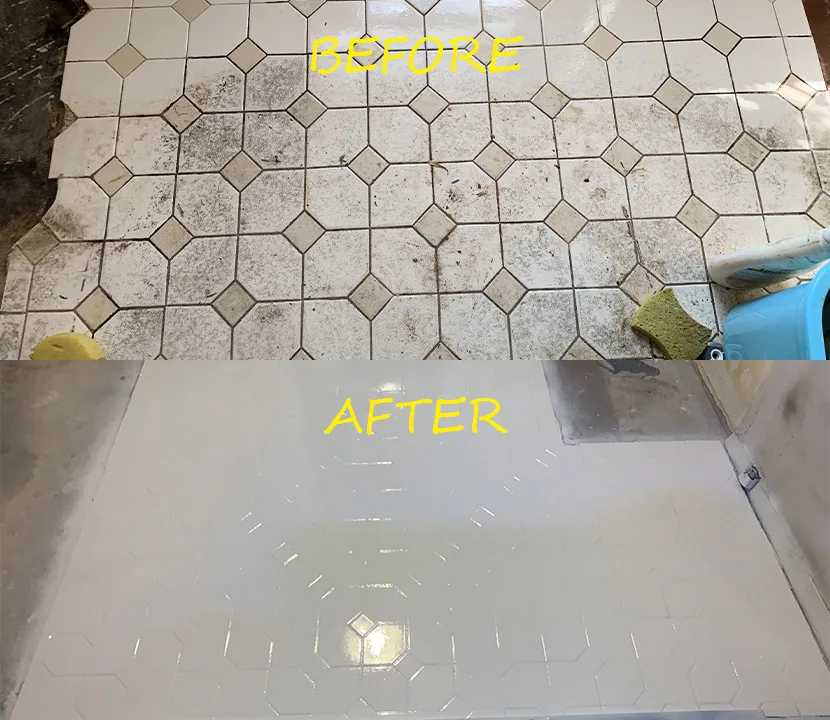
Yes. Grout color can be restored with special markers or grout paint. Makers offer products for any taste and budget, and a wide color range lets you match the shade you need very closely. That also makes a grout color change possible without digging anything out.
Before any of this the joints have to be cleaned. A stiff toothbrush, warm water and ordinary soap or baking soda will do. Pay special attention to corners and spots with visible dirt. In hard cases a special grout scraper can be used. The main thing is to work carefully so as not to damage the tile.
If mold has shown up on the surface, more serious treatment is needed. Scrub it off with detergent and water and let it dry completely; a mold and mildew cleaner can help. Wear gloves, air the room well while working and never mix bleach with other cleaners.
After cleaning comes the step of refreshing the joints. The quickest option is grout paint. It comes in a handy bottle with an applicator and gives the joints a neat look back without major work. Once the paint is on and dry, the joints look much fresher, and the bathroom itself changes noticeably.
Paint is for grout that is sound; grout that cracks or crumbles has to come out.
Reglaze grout along with the tile
There is also the route of coating the whole wall. With our tile reglazing service the coating can go over the grout, or the grout lines can be kept. In our tile reglazing, failing joints are re-grouted and sealed before the coating goes on. How that choice works is laid out in our guide to changing tile color. Examples of finished jobs are on the before and after gallery.
When the tile itself is the problem
New grout will not save a tile that is cracked, chipped or loose. Then the question is not about the joints anymore: individual damaged tiles get repaired or swapped, and only after that does it make sense to deal with the seams. What can be hidden on a tile floor and what cannot is covered in our post on hiding ceramic floor defects; when tiles have to come off, see our tile replacement service page.
Curing and sealing
Curing
Cement grout is simple to work with, mistakes can be fixed before it dries. Epoxy is harder. The mix starts to set and harden 30 to 40 minutes after it is applied. It has to go on fast and neatly, and the extra must be removed right away: hardened epoxy is almost impossible to get off the tile.
Sealing
To keep the joints clean for longer, a water-repellent grout sealer is enough. Such a layer forms an invisible film that does not let dirt soak in, helps keep mold off and keeps the joints light in color for a long time.
- Wash the tile and joints well with a mild detergent.
- Dry the surface completely.
- Apply a thin layer of the protective product with a brush or applicator.
- Let it dry as long as the label says.
After that the joints get dirty much less and stay neat for a long time.
Keeping new grout clean
- Do not forget about ventilation after a shower. The main cause of the black is stale damp air. Leave the bathroom door ajar for 20 to 30 minutes after bathing, or run the exhaust fan.
- Give up metal scrubbers. Never scrub the joints with steel pads or harsh abrasives. They leave fine scratches on the tile glaze and destroy the top protective layer of the grout, making it even more porous.
- Switch to melamine sponges. For weekly care of the joints, use a melamine sponge instead of harsh chemicals. It works like a soft eraser, rolling off surface dirt and soap film without harm to the joints.
The lasting result depends less on advertised miracle products than on the right approach: careful cleaning, suitable materials and thorough work. More routine tips are in our simple steps for maintaining bath tiles. Homeowners from our New Dorp, Staten Island service area and the rest of New York City face the same question about the joints.