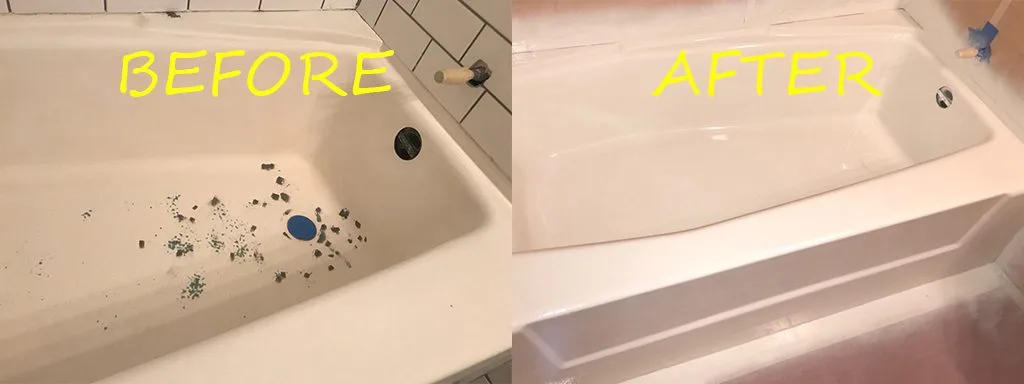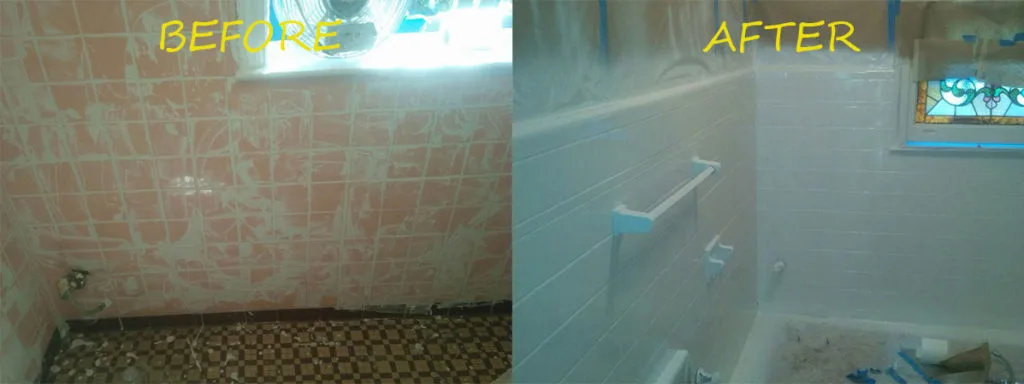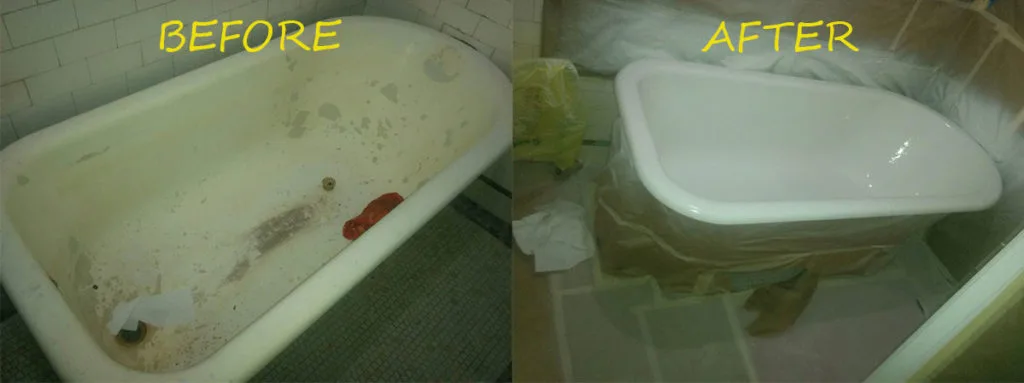

You go over the tub with a sponge, rinse, and the surface is light again - but a few days later a faint yellowish tint shows up in the same place, then it gets denser and turns rusty. Rust in a bathtub is one of the most unpleasant problems a tub surface can have. It does not always come from the same place, and it is not always fixed the same way.
Rust Stains, Rust Spots and Rust-Through: Three Different Problems
Before deciding what to do, it helps to figure out what kind of damage you are looking at. Tubs are made of cast iron, steel, acrylic, sometimes glass or stone. Cast iron, acrylic and steel are the most common, and those are the ones covered here.
A rust stain
Red or orange marks on top of the coating. The surface itself is whole, the color comes from the water. Rust stains in a bathtub can appear on practically any coating, regardless of the material - on acrylic, on metal, on enamel.
A rust spot
A chip in the enamel. This is the most common problem, and the one that takes the least effort - the main thing is not to let the gap grow and to seal it right away. If the chip goes down to the metal, you will not have to wait long for rust. A rust spot in a bathtub of this kind is the iron of the tub itself oxidizing, and no amount of scrubbing will remove it for good.
Rust-through
A through hole. It happens with all kinds of tubs, but while chips and cracks can be sealed, with a hole, replacement is usually the answer.
What Causes Rust Stains in a Bathtub
Orange spots form when iron oxidizes. This happens because the water is not the cleanest, or because of high humidity in the room.
Iron in the water
Red marks, cloudiness, a strange taste - all of this can come from iron. Sometimes it is visible right away. You pour water into a glass, it is clear and ordinary. It stands a while - a light yellowish tint appears and a sediment starts to settle on the bottom. In other cases it shows indirectly: white laundry loses its freshness and turns cream-colored, the water has a slightly metallic taste or a damp smell.
The curious part is that iron is not always visible at once. In water it can be in dissolved form. While the water runs through the pipes or has just been poured, it stays clear. But on contact with air, oxidation starts. The iron "drops out" as sediment, the color changes, and that same coating appears that is hard to wash off completely. That is why water can leave marks where everything used to be clean. The EPA guidance on secondary drinking water standards puts it in numbers: iron above 0.3 mg/L gives water a rusty color and reddish-orange staining, and manganese leaves black stains.
Iron in water also comes in different forms. Dissolved - the kind you do not see at first. Oxidized - it gives color and sediment. There is also bacterial iron, which adds slimy deposits and an unpleasant smell to the picture. From the outside it looks alike, but it behaves differently.
A dripping faucet
The same water, only in one spot, over and over. In a city building the signs are usually less obvious and drawn out over time: first a light coating, then problems with laundry, then the smell. A faucet that drips onto the same patch of enamel concentrates all of that into one orange streak under the spout.
Metal objects and chips
Where do chips come from? With steel tubs, it is the price of a low cost. A properly installed steel tub is not much different from a cast iron or acrylic one in use, but it is much less strong, so even a not very heavy object dropped into it can easily make a chip. Cast iron tubs are a lot stronger, but chips in their enamel are quite possible too. In normal use, people drop shower heads, soap dishes, bottles, razors and much else into the tub. During a renovation, a hammer, pliers or a piece of tile. Metal cans and other metal objects should not be stood in the tub or on its rim either, since they can damage the enamel.
Lifting a Rust Stain Safely
If you try hard enough, you can get rust out of a tub by any means. But there is a high risk of damaging the coating. So how to get rust stains out of a bathtub depends first of all on what the surface is.
From enamel
Use a mild acid: vinegar or citric acid with water, or an oxalic-acid cleaner. Apply it to the stained area. Wait 5-10 minutes and rinse. For rust marks on a cast iron tub, oxalic acid helps - wear gloves and keep the room ventilated. With an enameled coating you need to be very careful: store-bought cleaners that contain chlorine are better avoided - they destroy the enamel itself. The difference between the materials is covered in more detail in our article on restoring cast iron tubs.
From a reglazed or acrylic finish
Here you need to be especially careful. Acrylic does not tolerate aggressive chemicals and abrasive materials, so before you start, get special products and soft sponges. On a reglazed tub, use mild soap or a non-abrasive liquid cleaner with a soft cloth, and let it sit a few minutes on a stubborn stain. Try to choose "soft" products. They should not contain a high concentration of alkalis or alcohol - such a formula deforms the coating. The same caution applies to a tub that has been sprayed; what is safe for that surface is listed in the right way to clean a reglazed surface.
Vinegar, solvents and what not to use
These are the products and tools to forget about when caring for a tub:
- Strong acid solutions. Concentrated hydrochloric and sulfuric acid, and phosphoric acid products. They really can be very effective, but they suit far from every tub. It is quite likely the fixture will darken and only get new stains.
- Alcohol-based liquids or solvents. Do not use acetone, ammonia or mineral spirits. These products destroy the coating and give off volatile fumes that can cause poisoning.
- Bleach and ammonia. This mixture is truly dangerous. Bleach and ammonia form toxic gases that can leave a strong burn on the mucous membranes. Bleach should not be combined with vinegar or other acids either.
- Undiluted vinegar. The tub may survive it, but marble or limestone trim around it can be seriously damaged.
- Strong alkaline solutions. As a rule, such products work well for cleaning pipes, but they should not be used on the tub. The surface can deform and go cloudy.
- Metal sponges and brushes. They will scratch the enamel - dirt starts collecting harder in the micro-cracks.
Small spot stains can be removed with a toothbrush without aggressive chemicals.
Rust in the Bathtub Drain
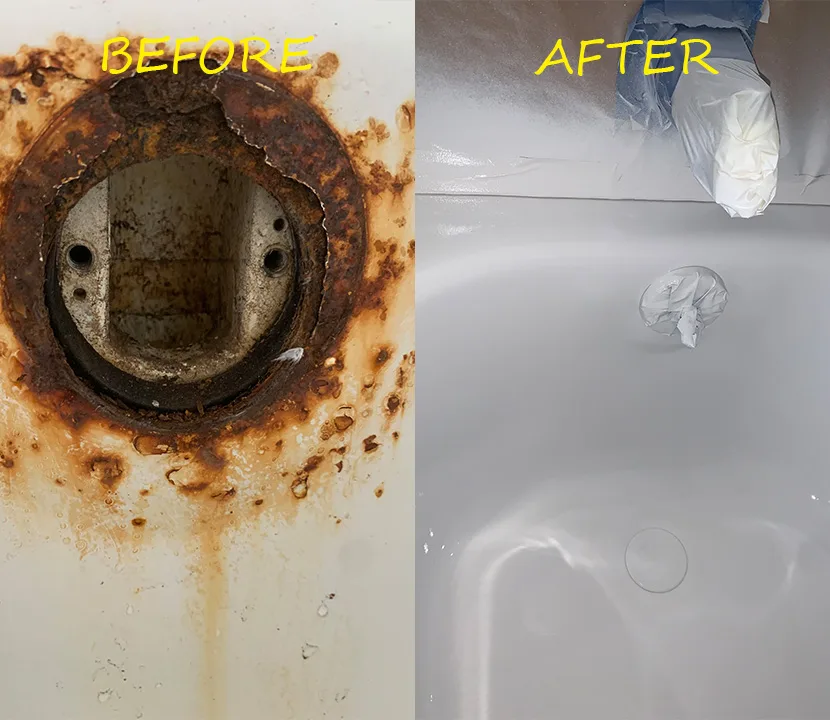
The drain is where water stands longest and where the enamel takes the most wear, so rust in a bathtub drain area is common. If the stain lifts with a mild acid and comes back after a few days, the cause is likely the water. If under the stain the enamel is broken, it is a chip, and here the same rule applies as anywhere else on the tub.
It is often said a chip does not need to be sealed. Various arguments are used - "it won't be like it was anyway", "it will rust more under the patch". Whether a chip will rust under a patch depends on the materials and how it is done. If you pour sealant over a chip without any surface preparation, water will still get to the metal of the tub. In a few months, the rust forming under the enamel will open an even larger area. Chips need sealing the same way even if no metal is visible, since there is no guarantee that micro-cracks have not formed in the enamel.
A stain comes from the water and can be washed off; a rust spot comes from the tub's own iron and has to be repaired.
Sealing an individual chip yourself is a separate topic, described in how to fix cracks and chips before reglazing. When we take on bathtub rust repair, we grind the rust out, neutralize it, fill the pitting and spray the whole tub; that repair is included in the quote.
Is Rust in a Bathtub Harmful?
All these signs may seem unrelated. People blame the detergent, the pipes, the quality of the cleaning products, the age of the appliances. But often the same reason is behind it - too much iron in the water. Some people notice hair gets harsher after a shower, skin drier, even though the care products have not changed. The EPA lists iron among nuisance chemicals - its limit of 0.3 mg/L is set for color and staining, not as a health standard.
A rust spot on the tub itself is another matter. It is not the rust that is the problem there but the open metal and the rough edge of the chip, which keeps getting wet and keeps spreading under the enamel.
When a Tub Is Past Repair
Many chips, or large ones, are still a repair job: they are filled and the whole tub is sprayed.
A through hole is where the line usually runs: a tub cracked through or leaking is usually replaced rather than reglazed. If the metal around it has thinned, there is not much left to hold a patch. How the numbers compare is laid out in reglazing vs replacement and its real cost.
Getting a Rusty Tub or Sink Looked At
Rust is better removed right away, before it eats in. If the stain will not lift, or there is metal showing under it, the tub needs repair rather than cleaning. Details on the work are on our bathtub reglazing service page; the same rust shows up around the drain of old sinks, which is covered under sink and vanity reglazing. You can look at finished drain and chip repairs in our before and after gallery. We work across the five boroughs and nearby New Jersey, including tub reglazing in Jamaica, Queens. To have a tub assessed, reach us through our contacts page.